I’ll be honest, I can’t stand the word “retirement.”
It comes from a different era. My grandfather did hard manual labor for decades, and by the time he stopped, his body needed the rest.
But today, most of us do knowledge work now. It’s taxing, but not like the back-breaking work of a construction or factory floor worker. We live longer, too. At 55, I could easily have another 30 years ahead of me, with 20+ of them active and healthy.
And yet retirement has been on my mind a lot lately. Three years ago I read Bob Buford’s book, Halftime: Moving from Success to Significance, and it planted a seed that keeps growing. I’ve also watched friends a little older than me retire the traditional way, spend a few restless months wondering what happened, and then head back to work in some form.
Many of you are at a crossroads right now, too. The past few years have shaken up this industry, and plenty of freelancers in their 50s are asking much bigger questions than “Where’s my next client coming from?”
They’re wondering if it’s time for a pivot. Or if they need to rethink their work and their priorities altogether.
At 55, this whole topic comes down to being more deliberate about the next 10+ years. Life is too short to spend it on anything other than the work you want, done the way you want to do it, with the people you want to do it with. My personal beacon is optionality. I want every year to give me a few more meaningful choices than the year before. And I want Sunday evenings to feel exciting because Monday is coming. (I remember the opposite feeling all too well from my corporate days!)
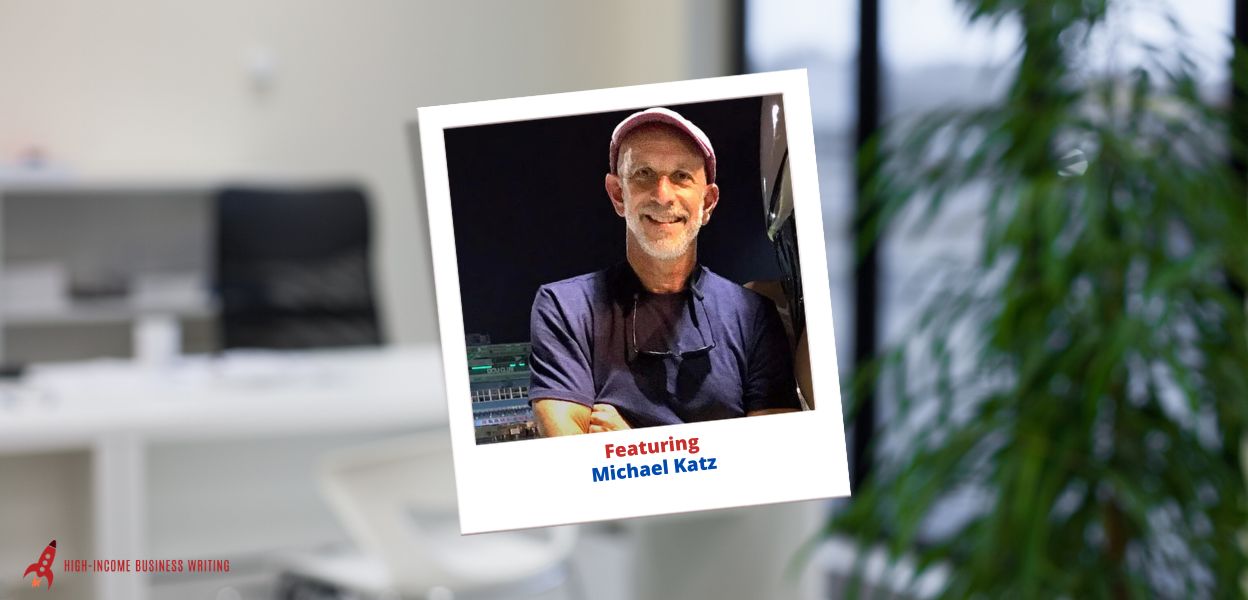
That’s why I invited my friend Michael Katz on the show.
Michael has been “the email newsletter guy” for more than 25 years. He founded Blue Penguin Development in 2000 and has written more than 600 issues of his own newsletter since then. Now, at 66, he’s taken his foot off the gas. He stopped taking on new clients this year, and he’s figuring out what comes next in real time. Luckily for us, he’s documenting his journey with a lot of honesty and plenty of humor.
In our conversation, Michael explains why he now introduces himself differently to people, and how he figured out that he was bored with his business but still loved the work itself. We get into things lie:
- The role identity plays into the retirement decision
- The strange challenge of having too much freedom
- Why paying attention to demand matters at any age
- How to tell whether you’re bored with your business or bored with the work
- The three-part overlap behind work you’ll want to keep doing for years (plus the fourth piece I’d add)
- Why freedom can feel harder than a job you can’t wait to leave
- And the Fenway Park tour guide experiment that took exactly one tour to rule out.
We even disagree (respectfully) about where to start when you’re trying to figure out what you want to do next.
One more thing. I forgot to ask Michael about this at the end of our conversation, so let me fix that here.
Michael writes an excellent newsletter called This Isn’t Working. It’s a free, twice-monthly email about life in the second half: aging, identity, marriage, money, purpose, and what happens when work stops defining your day.
It’s awesome. It’s hilarious. And every single issue gives me something to think about long after I’ve finished reading it. If you’re in your 50s or 60s, or you simply want to be more intentional about the decades ahead, do yourself a favor and subscribe at thisisntworking.net.
Key Ideas & Takeaways
- Retirement Belongs to Another Era. The traditional model made sense when work wore out your body. Today, many people retire the old way and find it doesn’t fit, then drift back into work after a few months. If you run your own business, you can reshape it instead of escaping it.
- Separate the Business From the Work. Michael still loves the writing. He’s tired of the marketing, selling, and front-end work required to land clients. His analogy: a basketball player can tire of the travel and the press while still loving the game, because every game is different.
- Look for the Overlap. Michael looks for work you’re good at, that you enjoy, and that someone will pay for. I’d add a fourth piece: you can live well from it. Michael starts by asking what people come to you for. I start by noticing when I lose track of time, and asking what I’d do for free. For me, that’s solving interesting business problems.
- Identity Can Shift More Easily Than You Expect. Michael once had an office full of framed press clippings, a penguin vanity plate, and penguins everywhere. Letting go of all that turned out to be easier than he feared. Calling himself a writer gives him an identity he can carry for the rest of his life.
- Freedom Brings Its Own Challenge. When you’ve worked for yourself for decades, you aren’t escaping anything. You already do what you want. So the question becomes harder: with so many choices, what do you pick next?
- Watch Demand at Every Age. Michael calls demand the most important marketing element. Each time the market shifted, he picked his head up and adjusted so he wasn’t selling something people no longer wanted. If he were 10 years younger, he’d be working hard on what else he could do.
- Run Small Experiments. Michael tried a Fenway Park tour and knew after one round that it wasn’t for him. Now he’s looking at work he loved earlier in life, like the fast pace of his bank teller days, and asking how to recreate those elements. His newest decision filter: does this sound like fun?
Action Steps
- Make two lists: the parts of your work you’d keep doing even without the money, and the parts of the business you’d happily drop or hand off.
- Look back over the past month and note the moments you lost track of time. Then list what friends and colleagues ask you to help with outside of paid work.
- Write down how you’d introduce yourself in 10 years if you couldn’t use your current job title.
- Pick one small experiment (a class, a volunteer gig, a side project, a one-day trial) and run it in the next 30 days.
- Subscribe to This Isn’t Working.
By the way… whenever you’re ready, here are 3 ways I can help you grow your freelance business:
1. Stop losing projects to writers who are already operating at the next level
AI is quickly changing what clients expect from a writer. The winners show up with better ideas, sharper thinking, and stronger client conversations—plus the confidence to scope, price, and deliver work that’s more strategic. That’s how you move up the value ladder, from “writer for hire” to “trusted partner who writes.”
The AI Advantage Hub gives you practical, field-tested capabilities every week, so you stay competitive without chasing tools or prompts. Plus, inside the Hub, you get unlimited, 24/7 access to my AI clone, Ed on Tap, to help you brainstorm, price strategically, and untangle your biggest business challenges.
2. In 30 days, know what’s next for your business (and know the market wants it).
The first 3 spots sold out quickly, and I may open a couple more soon. Here’s what it is. You’ve been circling this decision for months. The business model that carried you the last 5 years won’t carry you the next 5. And more thinking hasn’t gotten you unstuck. The Next-Chapter Sprint gives you a structured process, honest signals from the market, and a sounding board you can trust. We start with a half-day 1-on-1 workshop to pick your direction and kill the options that deserve killing. Then you pressure-test it in 3 to 5 real conversations with people who can help you validate the idea further. We finish by building your 90-day plan.
3. Build a premium AI revenue stream without rebuilding your business
When my schedule allows, I open 1 or 2 private spots for The 21-Day AI Consultant Accelerator. This is a half-day 1-on-1 workshop where we build your AI consulting offer, pricing, and pitch materials. Plus, three weeks of support while you pitch it to real clients. For details, and to see if there’s an opening, email me with “AI Revenue Stream” in the subject line.